
Mineral Categories and Roles
Minerals are inorganic elements that the body obtains from food. Unlike vitamins, minerals maintain their chemical structure and are not broken down during digestion. They are classified as either macro-minerals (needed in larger quantities) or trace minerals (needed in smaller quantities).
Macro-Minerals
Calcium supports bone structure, muscle contraction, and nerve transmission. Approximately 99% of the body's calcium is stored in bones. Magnesium participates in hundreds of enzymatic reactions and supports muscle and nerve function. Potassium regulates fluid balance and supports cardiac function.
Phosphorus works with calcium in bone structure and participates in energy metabolism. Sodium regulates fluid balance and supports nerve and muscle function. Sulfur is a component of certain amino acids and proteins.
Trace Minerals
Iron participates in oxygen transport as a component of hemoglobin and myoglobin, and in electron transport in cellular respiration. Zinc supports immune function, protein synthesis, and wound healing. Selenium functions as an antioxidant and supports thyroid function.
Copper supports iron metabolism and collagen synthesis. Iodine is essential for thyroid hormone production. Manganese participates in bone formation and antioxidant defense. Chromium supports glucose metabolism.
Food Sources
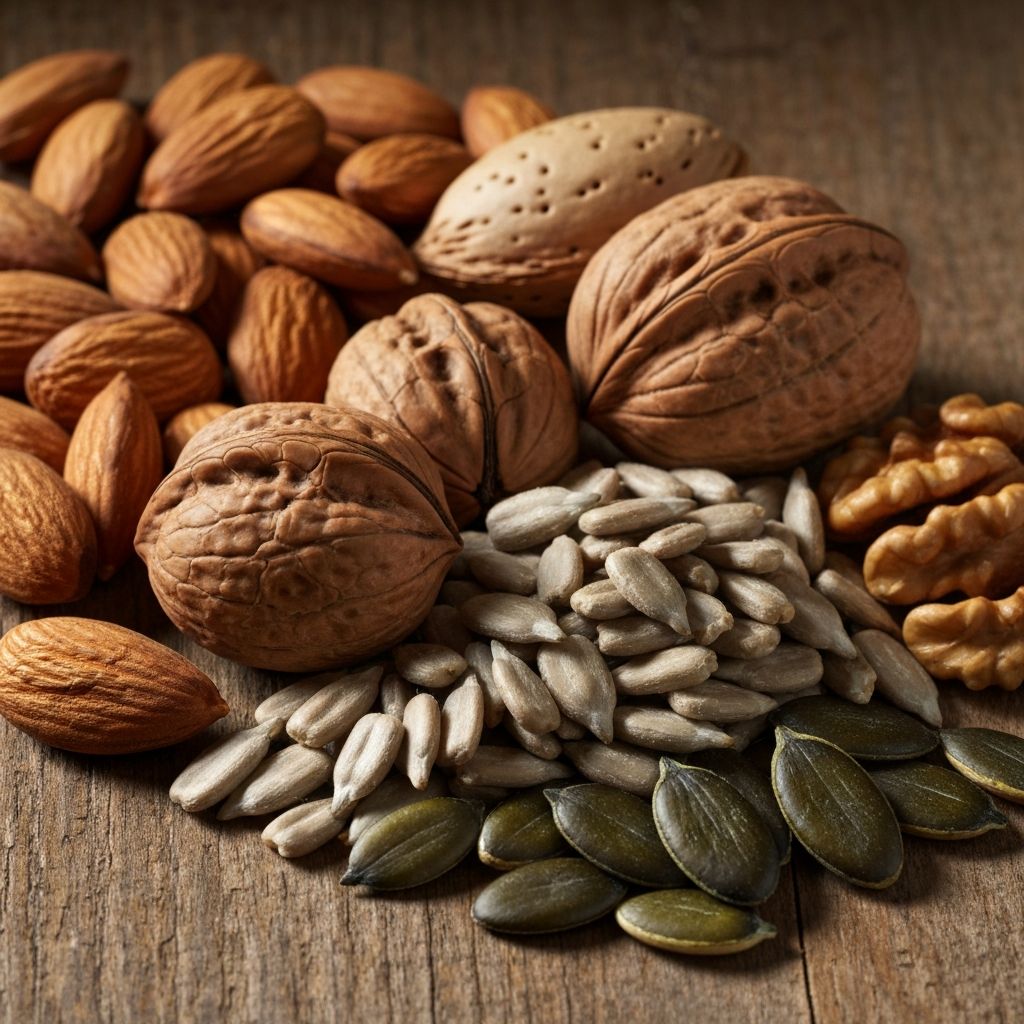
Dairy products and leafy greens provide calcium. Whole grains, nuts, and seeds provide magnesium. Legumes provide iron and zinc. Seafood provides selenium and iodine. Varied whole food consumption generally provides adequate mineral intake.